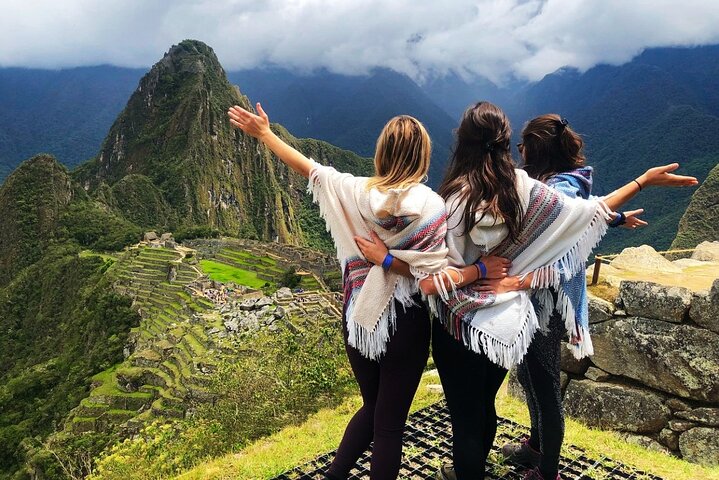


Sacred Valley & Machu Picchu Tours: The Perfect Pairing
Quick summary: A Sacred Valley and Machu Picchu tour combines the citadel with the beautiful valley of the Incas that lies between it and Cusco — a region rich in spectacular ruins, traditional markets, terraced hillsides and Andean villages. The Sacred Valley is a highlight in its own right and, sitting lower than Cusco, makes an ideal acclimatisation stepping stone before Machu Picchu. Combining the two gives a fuller picture of the Inca world than the citadel alone, at a comfortable pace, usually without trekking. It’s one of the most popular and rewarding ways to experience the region, ideal for first-time visitors.
Sacred Valley & Machu Picchu Tours at a Glance
| Detail | Information |
|---|---|
| What it is | The Sacred Valley combined with Machu Picchu |
| The valley | Between Cusco and Machu Picchu |
| Highlights | Inca ruins, markets, terraces and Andean villages |
| Key sites | Great Inca fortresses and terraced complexes |
| Acclimatisation | Lower than Cusco — ideal before Machu Picchu |
| Machu Picchu | Reached by train, usually no trekking |
| The pace | Comfortable and well-rounded |
| Best for | First-time visitors wanting more than the citadel |
| The reward | The fuller Inca world, not just the wonder |
What Is a Sacred Valley & Machu Picchu Tour?
A Sacred Valley and Machu Picchu tour combines a visit to the citadel with the Sacred Valley of the Incas — the beautiful, historic valley that lies between Cusco and Machu Picchu, and one of the richest parts of the Inca world.
The Sacred Valley follows the Urubamba River through dramatic Andean scenery and is dotted with spectacular Inca sites, traditional markets, terraced hillsides and living villages. Its highlights include great Inca fortresses and temple complexes, the famous terraced sites carved into the mountainsides, and colourful markets where Andean craft and produce are sold. A tour typically explores several of these before continuing to Machu Picchu itself, usually reached by scenic train via Aguas Calientes, and usually without trekking.
Pairing the two is popular for good reason. The Sacred Valley is a magnificent destination in its own right, not merely a route to the citadel, and seeing it alongside Machu Picchu gives a far fuller picture of Inca history and Andean life. Just as importantly, the valley sits lower than Cusco, which makes it an ideal place to acclimatise to the altitude before visiting Machu Picchu — both more comfortable and safer. For first-time visitors who want more than the citadel alone, at a comfortable pace, it’s one of the most rewarding combinations in the region.
What Are the Highlights of the Sacred Valley?
The Sacred Valley is rich in Inca history and Andean culture, and a tour typically takes in several of its outstanding sites and experiences, though the exact stops vary.
Great Inca fortresses and temples — the valley holds some of the most impressive Inca archaeological sites outside Machu Picchu itself, including dramatic fortress-temples set on hillsides, with fine stonework and commanding views.
Terraced complexes — the famous agricultural terraces carved into the mountainsides, engineering marvels that reveal the sophistication of Inca farming and are among the valley’s most striking sights.
Traditional markets — colourful Andean markets selling textiles, crafts and produce, where you can experience local culture and buy directly from artisans.
Andean villages — traditional towns and villages throughout the valley, offering a window into highland life past and present.
Terraced landscapes and scenery — the valley’s beautiful mountain and river scenery, terraced hillsides and farmland, a lovely backdrop throughout.
The gateway to Machu Picchu — the valley is also where the train to Machu Picchu departs (from Ollantaytambo), making it the natural staging point for the citadel.
Because a tour can’t cover everything, itineraries select from these highlights, so it’s worth checking which sites a given tour includes. What every Sacred Valley tour shares is the combination of world-class Inca sites, living Andean culture and beautiful scenery that makes the valley so rewarding — and its role as both a destination in its own right and the natural stepping stone to Machu Picchu, geographically, culturally and for acclimatisation.
Why Combine the Sacred Valley with Machu Picchu?
Combining the Sacred Valley with Machu Picchu offers real advantages over visiting the citadel alone, which is why it’s such a popular pairing.
A fuller picture of the Inca world — the Sacred Valley’s ruins, terraces and villages give context and depth to Machu Picchu, revealing the wider Inca civilisation of which the citadel was part, rather than seeing the wonder in isolation.
A magnificent destination in itself — the valley is not just a route to Machu Picchu but a highlight in its own right, so combining them means two great experiences rather than one.
Ideal acclimatisation — crucially, the valley sits lower than Cusco, so spending time there before Machu Picchu helps you adjust to the altitude gently, making the whole trip more comfortable and reducing altitude sickness risk.
A natural geographic route — the valley lies between Cusco and Machu Picchu, and the train to the citadel departs from within it, so combining them fits naturally into the journey.
A comfortable, well-rounded pace — seeing both at a relaxed pace, usually without trekking, makes for a rich but unhurried experience.
So combining the two is more than convenience — it gives depth, a second great destination, ideal acclimatisation and a natural route, all in one trip. For first-time visitors especially, seeing the Sacred Valley alongside Machu Picchu transforms a single-sight visit into a rounded experience of the Inca heartland. Those with very limited time might visit only the citadel, but for anyone who can spare the time, the valley is one of the most rewarding additions in the region, and a natural part of most well-planned Machu Picchu trips.
How Do Sacred Valley Tours Fit with Other Options?
Sacred Valley tours connect naturally with the other ways of visiting the region, and understanding how helps you plan.
Part of multi-day tours — the Sacred Valley is a core component of most 4-day, 5-day and extended tours, which combine it with Cusco and Machu Picchu as standard. If you’re taking one of these, the valley is likely already included.
As a focused combination — a dedicated Sacred Valley and Machu Picchu tour centres on the valley and citadel specifically, ideal if these are your priority.
With Cusco — the valley pairs naturally with Cusco, the nearby former Inca capital, and many itineraries include both cities alongside Machu Picchu for the fullest regional picture.
Versus trekking — unlike the treks, which focus on reaching Machu Picchu on foot, a Sacred Valley tour is a comfortable, non-trekking exploration of the valley’s sites, suitable for almost anyone. That said, some treks (like the Lares) pass through parts of the valley region.
For acclimatisation — because of its lower altitude, the valley is often used as an acclimatisation base before any Machu Picchu visit or trek, whatever style you choose.
So a Sacred Valley tour can be a focused combination in its own right, or a component of a longer itinerary — and it complements Cusco, the citadel and even the treks. For most well-rounded trips, the valley features one way or another, whether as the centrepiece of a dedicated tour or as part of a broader regional experience. Consider whether you want a focused Sacred Valley and Machu Picchu tour, or a longer itinerary that includes the valley alongside Cusco and more.
Who Are Sacred Valley & Machu Picchu Tours Best For?
These tours suit those who want more than the citadel alone, and some especially.
First-time visitors — the core audience, for whom seeing the valley alongside Machu Picchu gives the ideal rounded introduction to the Inca world.
History and culture lovers — for the world-class Inca sites, markets and villages throughout the valley.
Those wanting context for Machu Picchu — travellers who want to understand the wider civilisation, not just the wonder.
Those who value acclimatisation — since the valley is the ideal lower-altitude base before the citadel.
Non-trekkers — those wanting a rich regional experience without hiking.
Photographers and scenery lovers — for the terraced landscapes, ruins and Andean views.
Market and craft enthusiasts — for the valley’s famous traditional markets.
They are less ideal for those with only enough time for the citadel (a day or 2-day tour suits better), those who specifically want the trekking experience (choose a trek, though some pass through the region), or travellers wanting only Machu Picchu with no interest in the surrounding sites. But for first-time visitors, history and culture lovers, non-trekkers, and anyone who wants the fuller picture of the Inca world with ideal acclimatisation built in, a Sacred Valley and Machu Picchu tour is an excellent and popular choice, and for many the ideal way to experience the region.
Practical Tips for Sacred Valley & Machu Picchu Tours
- Use the valley to acclimatise — it sits lower than Cusco, so it eases the altitude.
- Check which sites are included — itineraries select from the valley’s highlights.
- Often already in multi-day tours — 4-day and longer tours usually include it.
- The train to Machu Picchu departs from within the valley (Ollantaytambo).
- Bring cash for the traditional markets and buying from artisans.
- Aim for the dry season (roughly May–September) for the best conditions.
- Pair with Cusco for the fullest picture of the Inca heartland.
Are Sacred Valley & Machu Picchu Tours Worth It?
For first-time visitors, history and culture lovers, non-trekkers, and anyone who wants more than the citadel alone, a Sacred Valley and Machu Picchu tour is well worth it — one of the most rewarding ways to experience the Inca heartland.
The appeal is depth and context. The Sacred Valley of the Incas, lying between Cusco and Machu Picchu, is a magnificent destination in its own right, rich in spectacular Inca ruins, famous terraced complexes, colourful traditional markets, Andean villages and beautiful mountain-and-river scenery. Seeing it alongside Machu Picchu gives a far fuller picture of the Inca world, revealing the wider civilisation of which the citadel was part rather than the wonder in isolation. Just as valuably, the valley sits lower than Cusco, making it an ideal place to acclimatise to the altitude before visiting Machu Picchu, which is both more comfortable and safer. And because the valley lies on the natural route to the citadel, with the train departing from within it, combining the two fits seamlessly into the journey, usually without any trekking.
The honest consideration is simply time: seeing the valley as well as the citadel takes longer than a straight day trip to Machu Picchu, so those with very limited time might visit only the wonder itself. And those set on the trekking experience should choose a trek, though some pass through parts of the region. It’s also worth noting the valley is already a core component of most 4-day, 5-day and extended tours, so if you’re taking one of those, you’ll likely see it anyway.
But for anyone who can spare the time and wants the fuller picture — the context, the second great destination, the ideal acclimatisation and the natural route — a Sacred Valley and Machu Picchu tour is thoroughly worth it, and for many the ideal, well-rounded way to experience one of the world’s great historical regions rather than just its most famous site.
Frequently Asked Questions
It is a tour combining a visit to Machu Picchu with the Sacred Valley of the Incas, the beautiful, historic valley between Cusco and the citadel. The valley is rich in spectacular Inca ruins, traditional markets, terraced hillsides and living villages, and a tour typically explores several of these before continuing to Machu Picchu by scenic train, usually without trekking. The valley is a magnificent destination in its own right and, sitting lower than Cusco, an ideal place to acclimatise before the citadel.
The valley holds some of the most impressive Inca sites outside Machu Picchu, including dramatic hillside fortress-temples with fine stonework; the famous agricultural terraces carved into the mountainsides; colourful traditional markets selling textiles, crafts and produce; and traditional Andean villages offering a window into highland life. Its beautiful mountain and river scenery forms the backdrop throughout, and it is also where the train to Machu Picchu departs. Itineraries select from these highlights, so check which sites your tour includes.
Combining them gives a fuller picture of the Inca world, as the valley’s ruins, terraces and villages provide context and depth to Machu Picchu rather than seeing the wonder in isolation. The valley is a magnificent destination in itself, so you get two great experiences. Crucially, it sits lower than Cusco, making it ideal for acclimatising before Machu Picchu, and it lies on the natural route to the citadel, with the train departing from within it, so combining them fits naturally into the journey.
Yes, it is ideal. The Sacred Valley sits lower than Cusco, so spending time there before visiting Machu Picchu helps you adjust to the altitude more gently than staying at Cusco’s greater height, making the whole trip more comfortable and reducing the risk of altitude sickness. Many itineraries deliberately use the valley as an acclimatisation base before the citadel or a trek, whatever style you choose. This lower-altitude advantage, combined with its sites and its position on the route, is a key reason the valley features in most trips.
The Sacred Valley is very much worth visiting in its own right, not merely a route to the citadel. It holds world-class Inca sites, famous terraces, colourful markets, traditional villages and beautiful scenery, giving depth and context to Machu Picchu and revealing the wider Inca civilisation. For anyone who can spare the time, it is one of the most rewarding additions in the region and a natural part of most well-planned trips. Only those with very limited time might visit the citadel alone.
Usually, yes. The Sacred Valley is a core component of most 4-day, 5-day and extended Machu Picchu tours, which combine it with Cusco and the citadel as standard, so if you are taking one of these it is likely already included. Alternatively, a dedicated Sacred Valley and Machu Picchu tour centres specifically on the valley and citadel. Check the itinerary of any multi-day tour to see how much valley time it includes, and consider a focused tour if the valley is your particular priority.
The best time is the dry season, roughly May to September, when the weather is most reliable and the views clearest across the valley’s ruins, terraces and scenery, and at Machu Picchu, though it is also the busiest, so book furthest ahead. The wet season brings more rain and cloud, though it is quieter and greener. Entry to Machu Picchu is by timed ticket with limits year-round, so book train and entries ahead. Unlike the Inca Trail, the citadel stays open in February.
They suit first-time visitors wanting a rounded introduction to the Inca world, history and culture lovers drawn to the valley’s sites, markets and villages, and those wanting context for Machu Picchu rather than the wonder in isolation. They appeal to those who value acclimatisation, non-trekkers wanting a rich regional experience, photographers and scenery lovers, and market enthusiasts. They are less ideal for those with only enough time for the citadel, those wanting the trekking experience, or travellers interested in Machu Picchu alone.