


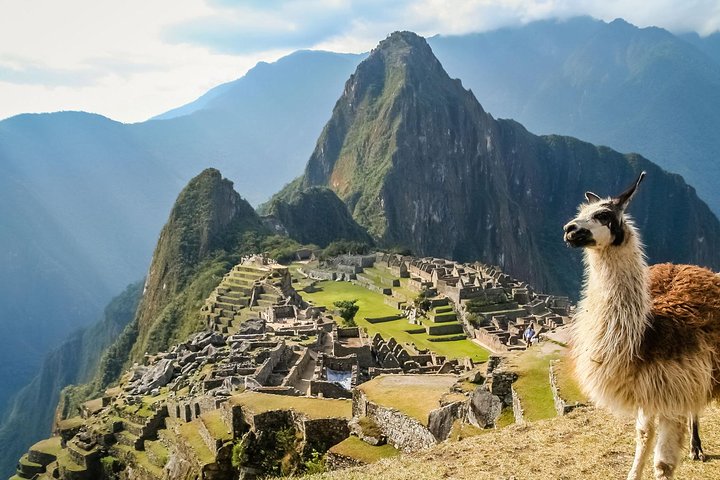
Rainbow Mountain & Machu Picchu Tours: Striped Peak and Ancient Citadel
Quick summary: A Rainbow Mountain and Machu Picchu tour pairs the citadel with Vinicunca, the famous “Rainbow Mountain” whose naturally striped, multicoloured slopes have become one of Peru’s most photographed sights. Rainbow Mountain is a day trip from Cusco involving an early start and a hike at extreme altitude — it’s the highest and among the most demanding of the region’s popular day excursions. Combining it with Machu Picchu gives a striking natural spectacle alongside the ancient wonder. It’s a rewarding pairing for scenery lovers, but the very high altitude makes proper acclimatisation and reasonable fitness essential.
Rainbow Mountain & Machu Picchu Tours at a Glance
| Detail | Information |
|---|---|
| What it is | Rainbow Mountain combined with Machu Picchu |
| Rainbow Mountain | Vinicunca, a naturally striped, multicoloured peak |
| Why famous | Its vivid bands of natural colour |
| Reaching it | A day trip from Cusco with a high-altitude hike |
| Altitude | Extremely high — among the highest day trips |
| Difficulty | Demanding, chiefly due to the thin air |
| Machu Picchu | Reached by train, usually no trekking |
| The pairing | A natural spectacle and a historical wonder |
| Best for | Fit, well-acclimatised scenery lovers |
What Is a Rainbow Mountain & Machu Picchu Tour?
A Rainbow Mountain and Machu Picchu tour combines a visit to the citadel with Vinicunca, popularly known as Rainbow Mountain — a peak whose naturally striped, multicoloured slopes have become one of Peru’s most famous and photographed sights.
Rainbow Mountain owes its extraordinary appearance to bands of differently coloured mineral deposits, which give the mountainside vivid stripes of red, gold, green and other hues. It’s reached on a day trip from Cusco, involving a very early start, a long drive, and a hike at extreme altitude to the viewpoint. It has rapidly become one of the region’s most popular excursions. A tour combines it with Machu Picchu itself, usually reached separately by scenic train, pairing a striking natural spectacle with the ancient Inca wonder.
The essential thing to understand is the altitude. Rainbow Mountain sits extremely high — among the highest of all the region’s popular day trips, higher than Machu Picchu, Cusco and even Humantay Lake — and the hike, while not enormously long, is genuinely demanding because of the thin air. Proper acclimatisation and reasonable fitness are essential, and it should never be attempted on arrival or without adjusting first. For fit, well-acclimatised scenery lovers, it’s a spectacular and rewarding addition to a Machu Picchu trip; for those unprepared for the altitude, it can be a real struggle.
What Is Rainbow Mountain Like, and How Do You Reach It?
Rainbow Mountain is a spectacular high-altitude natural sight, and reaching it involves a long, demanding day trip.
The mountain itself — Vinicunca’s fame comes from its naturally striped slopes, coloured by bands of different mineral deposits into vivid stripes of red, gold, green, turquoise and more. The effect, especially in good light, is genuinely striking and unlike anywhere else, which is why it’s become so photographed.
Getting there — Rainbow Mountain is reached on a day trip from Cusco, typically involving a very early start (often before dawn), a long drive to the trailhead, and then the hike, returning to Cusco late in the day. It’s a long day out.
The hike — the walk to the viewpoint is not enormously long, but climbs at extreme altitude, which makes it demanding. Some tours offer the option of hiring a horse for part of the ascent, which can help those who find the altitude hard going.
The extreme altitude — Rainbow Mountain sits higher than almost any other popular excursion in the region, higher than Machu Picchu, Cusco and Humantay Lake, so the thin air is the dominant challenge and acclimatisation is critical.
What to expect — a very early start, a long day, a hike at extreme altitude, and cold, exposed, changeable mountain weather — rewarded with an extraordinary natural spectacle.
So Rainbow Mountain is the most altitude-demanding of the region’s popular day trips, and shouldn’t be underestimated: the extreme elevation makes it genuinely hard for many, even those who manage other excursions comfortably. Thorough acclimatisation beforehand — several days at altitude in Cusco and the Sacred Valley — is essential, and the horse option provides a fallback for the ascent. For those prepared, the reward of standing before the striped peak is spectacular; for the unprepared, the altitude can genuinely spoil it.
Why Combine Rainbow Mountain with Machu Picchu?
Combining Rainbow Mountain with Machu Picchu is a rewarding pairing for those drawn to spectacular scenery, for several reasons.
A natural spectacle and a historical wonder — the vividly striped mountain and the ancient citadel are two utterly different highlights, so combining them gives a strikingly varied experience.
Two of Peru’s most famous sights — both Rainbow Mountain and Machu Picchu are among the country’s most photographed and celebrated places, so pairing them captures two icons in one trip.
Dramatic scenery alongside history — for travellers who want extraordinary landscape as well as Inca history, the combination delivers a memorable contrast.
Efficient use of a trip — both are based from the Cusco region, so combining them into one itinerary is a natural way to see more.
A rising favourite — Rainbow Mountain has become enormously popular in recent years as an addition to Machu Picchu trips, precisely for its unique, photogenic spectacle.
So the pairing suits scenery lovers who want more than the citadel. The major consideration, more so than for any other add-on, is the extreme altitude: Rainbow Mountain is the highest and among the most demanding of the popular day trips, so it’s suited only to those who are fit and thoroughly acclimatised, and fits best into itineraries of several days that allow ample time to adjust first. Those with limited time, altitude concerns, or who can’t manage a hike at extreme elevation should think carefully, and may prefer a gentler add-on or the citadel alone. But for fit, well-acclimatised scenery lovers, adding Rainbow Mountain to a Machu Picchu trip is a spectacular combination, often included in 5-day and extended tours.
How Does Rainbow Mountain Fit with Other Tours?
Rainbow Mountain connects with the other ways of visiting the region in a few ways worth understanding when planning, with altitude the key factor throughout.
As a day-trip add-on — Rainbow Mountain is most often added as a single day trip within a broader Machu Picchu itinerary, alongside the citadel and other highlights.
Part of longer tours — it commonly features in 5-day and extended tours, which have the time to include such a demanding, extreme-altitude day trip alongside Cusco, the Sacred Valley and Machu Picchu.
With Humantay Lake — it pairs naturally with Humantay Lake, another popular high-altitude day trip, for those wanting several natural highlights — though doing both means two very demanding high-altitude days, so ample acclimatisation is vital.
Late in the itinerary — because of its extreme altitude, Rainbow Mountain fits best near the end of a trip, once you’re thoroughly acclimatised, never at the start.
Acclimatisation is critical — more than for any other excursion, Rainbow Mountain demands that you’ve fully adjusted to the altitude first, so it should follow days in Cusco and the Sacred Valley.
So Rainbow Mountain can be a day-trip add-on to a Machu Picchu tour or a component of a longer itinerary, but the overriding planning point is acclimatisation. Given it’s the highest of the popular excursions, it must come after you’ve had several days to adjust, which is why it fits most naturally into 5-day and extended itineraries. If Rainbow Mountain is a priority, look for a longer tour that includes it and schedules it late, once you’re acclimatised, and consider the horse option for the ascent if you’re unsure about the altitude.
Who Are Rainbow Mountain & Machu Picchu Tours Best For?
These tours suit fit, well-acclimatised scenery lovers, and some especially.
Scenery and nature lovers — the core audience, for the extraordinary striped peak and dramatic high-altitude landscape.
Those wanting an iconic natural sight — travellers drawn to one of Peru’s most famous and photographed places.
Fit travellers — those able to manage a hike at extreme altitude (with the horse option as a fallback).
Thoroughly acclimatised visitors — those who’ve had ample time to adjust, since Rainbow Mountain is extremely high.
Photographers — for one of the most spectacular and unique sights in the region.
Those on longer itineraries — travellers on 5-day or extended tours with time for a demanding extreme-altitude day trip late in the trip.
Adventurous travellers — those wanting a challenging, memorable natural highlight alongside the citadel.
They are less ideal for those with very limited time, travellers with altitude concerns or who can’t manage extreme elevation (this is the highest of the popular day trips, so caution matters most here), those who haven’t acclimatised, or anyone wanting only Machu Picchu without strenuous excursions. Given the extreme altitude, anyone unsure about how they handle height should be especially careful. But for fit, thoroughly acclimatised scenery lovers who want an iconic natural spectacle alongside the ancient citadel, and can fit it late into a longer trip, a Rainbow Mountain and Machu Picchu tour is a spectacular and memorable combination.
Practical Tips for Rainbow Mountain & Machu Picchu Tours
- Acclimatise thoroughly first — it’s the highest popular day trip, so this is critical.
- Schedule it late in your trip, never on arrival, after days at altitude.
- Expect a very early start and a long day from Cusco.
- It’s demanding due to altitude — consider the horse option for the ascent.
- Often in 5-day and extended tours with time to acclimatise first.
- Pack for cold, exposed high-altitude weather, and hope for a clear day.
- Aim for the dry season (roughly May–September) for the clearest colours.
Are Rainbow Mountain & Machu Picchu Tours Worth It?
For fit, thoroughly acclimatised scenery lovers, a Rainbow Mountain and Machu Picchu tour is well worth it — a spectacular pairing of a unique natural sight with the ancient citadel — provided the extreme altitude is respected.
The appeal is the combination of two of Peru’s most famous and utterly different sights. Rainbow Mountain, or Vinicunca, is extraordinary: a peak whose naturally striped slopes, coloured by bands of mineral deposits into vivid stripes of red, gold, green and more, have made it one of the country’s most photographed places. Pairing it with Machu Picchu gives a striking natural spectacle alongside the ancient Inca wonder, dramatic high-altitude landscape and historical grandeur in one trip, capturing two icons at once. It’s little wonder Rainbow Mountain has become such a popular addition to Machu Picchu itineraries in recent years.
The honest and critical consideration is the altitude, more so than for any other excursion in the region. Rainbow Mountain sits extremely high, among the highest of all the popular day trips, higher than Machu Picchu, Cusco and even Humantay Lake, and the hike, while not enormously long, is genuinely demanding in the thin air, hard even for many who manage other excursions comfortably. Thorough acclimatisation is absolutely essential, so it must come late in a trip after several days adjusting in Cusco and the Sacred Valley, and it fits best into 5-day and extended itineraries. The horse option can help with the ascent. Those with limited time, altitude concerns, or who can’t manage a hike at extreme elevation should think carefully, and may prefer a gentler add-on or the citadel alone.
But for its audience — fit, well-acclimatised scenery lovers who want an iconic natural spectacle alongside the citadel and can schedule it late in a longer trip — a Rainbow Mountain and Machu Picchu tour is thoroughly worth it, delivering one of Peru’s most unique and unforgettable sights alongside its most famous historical one, so long as the altitude is given the respect it demands.
Frequently Asked Questions
It is a tour combining a visit to the citadel with Vinicunca, popularly known as Rainbow Mountain, a peak whose naturally striped, multicoloured slopes have become one of Peru’s most famous and photographed sights. Its vivid bands of colour come from different mineral deposits. Rainbow Mountain is reached on a day trip from Cusco with an early start and a hike at extreme altitude, and is combined with Machu Picchu, usually reached separately by train, pairing a natural spectacle with the ancient wonder.
Rainbow Mountain is reached on a day trip from Cusco, typically involving a very early start, often before dawn, a long drive to the trailhead, and then a hike to the viewpoint, returning to Cusco late in the day. The walk is not enormously long but climbs at extreme altitude, which makes it demanding. Some tours offer the option of hiring a horse for part of the ascent, which can help those who find the altitude hard going. Expect a long day and cold, exposed weather.
It is demanding, chiefly because of the extreme altitude rather than the distance. Rainbow Mountain sits higher than almost any other popular excursion in the region, higher than Machu Picchu, Cusco and even Humantay Lake, so the thin air is the dominant challenge and it is genuinely hard for many, even those who manage other excursions comfortably. Thorough acclimatisation beforehand is essential, and a horse can be hired for part of the ascent as a fallback if the altitude proves difficult.
Combining them pairs a natural spectacle with a historical wonder, the vividly striped mountain and the ancient citadel, for a strikingly varied experience. Both are among Peru’s most famous and photographed sights, so pairing them captures two icons in one trip, delivering dramatic scenery alongside Inca history. Since both are based from the Cusco region, combining them is efficient. Rainbow Mountain has become enormously popular as an addition to Machu Picchu trips for its unique, photogenic spectacle.
Rainbow Mountain is extremely high, among the highest of all the region’s popular day trips, higher than Machu Picchu, Cusco and even Humantay Lake. This makes thorough acclimatisation absolutely essential, more so than for any other excursion. It should never be attempted on arrival or without adjusting first, and fits best late in a trip after several days at altitude in Cusco and the Sacred Valley. Anyone with altitude concerns should be especially cautious, and the horse option offers a fallback for the ascent.
Rainbow Mountain is most often added as a single day trip within a broader Machu Picchu itinerary, and commonly features in 5-day and extended tours with time for such a demanding, extreme-altitude day out. It pairs naturally with Humantay Lake, another high-altitude day trip, though doing both means two very demanding days needing ample acclimatisation. Because of its extreme altitude, it fits best near the end of a trip, after you are thoroughly acclimatised in Cusco and the Sacred Valley, never at the start.
The best time is the dry season, roughly May to September, when the weather is most reliable, the trail driest and the colours of the mountain clearest, though it is also the busiest. The wet season brings rain, cloud and mud that can obscure the colours and make the trail harder, and in the coldest months snow can sometimes cover the mountain entirely. Whenever you go, expect cold, exposed, changeable high-altitude weather, so pack warm layers, and aim for a clear day for the best views.
They suit fit, thoroughly acclimatised scenery lovers drawn to the extraordinary striped peak, those wanting an iconic natural sight alongside the citadel, and photographers. They appeal to those on 5-day or extended tours with time to acclimatise and schedule it late, and adventurous travellers wanting a challenging highlight. They are less ideal for those with very limited time, travellers with altitude concerns or who cannot manage extreme elevation, those who have not acclimatised, or anyone wanting only Machu Picchu. Given the extreme altitude, caution matters most here.